

19 November 2026
NGINX2Root: What five critical NGINX vulnerabilities mean for you
FSP THREAT INTELLIGENCE
Five critical vulnerabilities in F5 NGINX Plus and NGINX Open Source allow unauthenticated remote code execution and denial of service. Fixes are available in NGINX Open Source 1.30.7 (stable) and 1.31.9 (mainline), and in NGINX Plus 37.0.8.1 and 37.3.0.1.
NGINX is widely used web server and traffic-management software that sits in front of websites, applications and APIs. Organisations commonly use it to serve web content, route traffic as a reverse proxy, balance requests across multiple systems, terminate TLS encryption and support modern protocols such as HTTP/2 and HTTP/3.
Summary
The short version
- Patch now. Fixed releases are NGINX Open Source 1.30.7 or 1.31.9 and NGINX Plus 37.0.8.1 or 37.3.0.1 (highest CVSS 9.2, critical).
- No exploitation reported or observed yet.
- We assess there is a realistic possibility of mass exploitation in the next 7 days. (realistic possibility, 40–<50%)
- Do not forget what you do not run yourself. Hosted sites, supplier portals and appliances that embed NGINX are where unpatched copies tend to hide.
| CVE | CVSS | Severity | KEV | Published |
| CVE-2026-113425 | 9.2 | CRITICAL | No | 2026-11-18 |
| CVE-2026-121810 | 9.2 | CRITICAL | No | 2026-11-18 |
| CVE-2026-123007 | 9.2 | CRITICAL | No | 2026-11-18 |
| CVE-2026-123633 | 9.2 | CRITICAL | No | 2026-11-18 |
| CVE-2026-123634 | 9.2 | CRITICAL | No | 2026-11-18 |
What happened
F5 published security advisories for five critical vulnerabilities in NGINX, including CVE-2026-113425, CVE-2026-121810, CVE-2026-123007, CVE-2026-123633, and CVE-2026-123634. CERT-FR and CERT-EU issued advisories recommending swift updates and temporary mitigations such as disabling HTTP/2.
| CVE | Product | Affected versions | Fixed in |
| CVE-2026-113425 | NGINX Open Source | from 1.30.0 before 1.30.7 | 1.30.7 |
| CVE-2026-121810 | NGINX Open Source | from 1.30.0 before 1.30.7 | 1.30.7 |
| CVE-2026-123007 | NGINX Open Source | from 1.30.0 before 1.30.7 | 1.30.7 |
| CVE-2026-123633 | NGINX Open Source | from 1.30.0 before 1.30.7 | 1.30.7 |
| CVE-2026-123634 | NGINX Open Source | from 1.30.0 before 1.30.7 | 1.30.7 |
| CVE-2026-113425 | NGINX Open Source | from 1.31.0 before 1.31.9 | 1.31.9 |
| CVE-2026-121810 | NGINX Open Source | from 1.31.0 before 1.31.9 | 1.31.9 |
| CVE-2026-123007 | NGINX Open Source | from 1.31.0 before 1.31.9 | 1.31.9 |
| CVE-2026-123633 | NGINX Open Source | from 1.31.0 before 1.31.9 | 1.31.9 |
| CVE-2026-123634 | NGINX Open Source | from 1.31.0 before 1.31.9 | 1.31.9 |
| CVE-2026-113425 | NGINX Open Source | from 0.5.33 | no fix (move to a fixed branch) |
| CVE-2026-121810 | NGINX Open Source | from 1.25.0 | no fix (move to a fixed branch) |
| CVE-2026-123007 | NGINX Open Source | from 1.9.5 | no fix (move to a fixed branch) |
| CVE-2026-123633 | NGINX Open Source | from 1.19.7 | no fix (move to a fixed branch) |
| CVE-2026-123634 | NGINX Open Source | from 0.6.18 | no fix (move to a fixed branch) |
| CVE-2026-123633 | NGINX Plus | from 37.0.0.1 before 37.0.7.1 | 37.0.7.1 |
| CVE-2026-113425 | NGINX Plus | from 37.0.0 before 37.0.8.1 | 37.0.8.1 |
| CVE-2026-121810 | NGINX Plus | from 37.0.0 before 37.0.8.1 | 37.0.8.1 |
| CVE-2026-123007 | NGINX Plus | from 37.0.0 before 37.0.8.1 | 37.0.8.1 |
| CVE-2026-123634 | NGINX Plus | from 37.0.0 before 37.0.8.1 | 37.0.8.1 |
| CVE-2026-123633 | NGINX Plus | from 37.1.0.1 before 37.2.0.1 | 37.2.0.1 |
| CVE-2026-113425 | NGINX Plus | from 37.1.0 before 37.3.0.1 | 37.3.0.1 |
| CVE-2026-121810 | NGINX Plus | from 37.1.0 before 37.3.0.1 | 37.3.0.1 |
| CVE-2026-123007 | NGINX Plus | from 37.1.0 before 37.3.0.1 | 37.3.0.1 |
| CVE-2026-123634 | NGINX Plus | from 37.1.0 before 37.3.0.1 | 37.3.0.1 |
| CVE-2026-113425 | NGINX Plus | from R33 | no fix (move to a fixed branch) |
| CVE-2026-121810 | NGINX Plus | from R33 | no fix (move to a fixed branch) |
| CVE-2026-123007 | NGINX Plus | from R33 | no fix (move to a fixed branch) |
| CVE-2026-123633 | NGINX Plus | from R33 | no fix (move to a fixed branch) |
| CVE-2026-123634 | NGINX Plus | from R33 | no fix (move to a fixed branch) |
Exploitation and honeypot telemetry
No exploitation has been reported or observed yet. Our platform has recorded zero honeypot sightings for these vulnerabilities. The exploitation timeline shows reporting but no exploitation activity between 2026-11-18 and 2026-11-19.
- Status: No exploitation reported or observed yet.
- Shadowserver honeypots: no exploitation attempts tagged with these CVEs yet. Sensor networks need a signature before they can label traffic, so this is not evidence that no attacks are taking place.
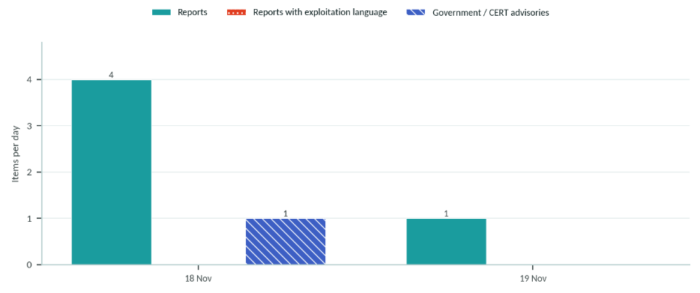
Figure 1: Reports, advisories and honeypot sightings per day for NGINX
Each bar counts items our platform correlated with these CVEs on that day.
Our assessment
- We assess there is a realistic possibility of mass exploitation in the next 7 days. (40–<50%) Confidence: Moderate. High CVSS scores and widespread affected versions, but no current exploitation observed.
- We assess there is a realistic possibility of attacker activity targeting internet-facing NGINX instances. (40–<50%) Confidence: Moderate. Critical severity and public disclosure, but no honeypot sightings yet.
- We assess there is a realistic possibility that end-of-life NGINX systems, which cannot be patched, will be targeted. (40–<50%) Confidence: Moderate. 85% of versioned hosts are on end-of-life branches, which the affected version ranges include and for which no fix is listed; no exploitation is observed yet.
Internet landscape
| 60.1M | 100% | 1.21M |
| internet-facing services advertising NGINX (Shodan) | of those with a version on an affected branch | of them in the UK |
| 763,644 | 1,192,945 |
| advertise HTTP/2 over TLS (ALPN h2), 20,186 in the UK | advertise HTTP/3 (Alt-Svc h3), 58,892 in the UK |
Across the organisations we monitor, 85% of versioned hosts run end-of-life branches and 15% run supported branches. On the internet, 90% of versioned services advertise end-of-life branches. Specifically, 763,644 services worldwide advertise HTTP/2 over TLS, which is required for CVE-2026-123007 and CVE-2026-123633, and 1,192,945 services advertise HTTP/3, which is required for CVE-2026-121810. These counts represent a floor of advertised features, not the total number of vulnerable systems. The countries with the most NGINX services are the United States, China and Hong Kong.
A CVE that needs a feature is only reachable where that feature is on. Shodan sees what a service advertises on the ports it scans, so these counts are a floor for that feature, not a ceiling.
| Country | Services advertising NGINX | Share |
| United States | 15,256,088 | 25% |
| China | 12,783,590 | 21% |
| Hong Kong | 4,133,696 | 7% |
| Germany | 2,904,818 | 5% |
| Japan | 2,883,347 | 5% |
| Canada | 2,834,362 | 5% |
| Singapore | 1,761,896 | 3% |
| France | 1,565,914 | 3% |
| South Korea | 1,369,216 | 2% |
| Netherlands | 1,362,859 | 2% |
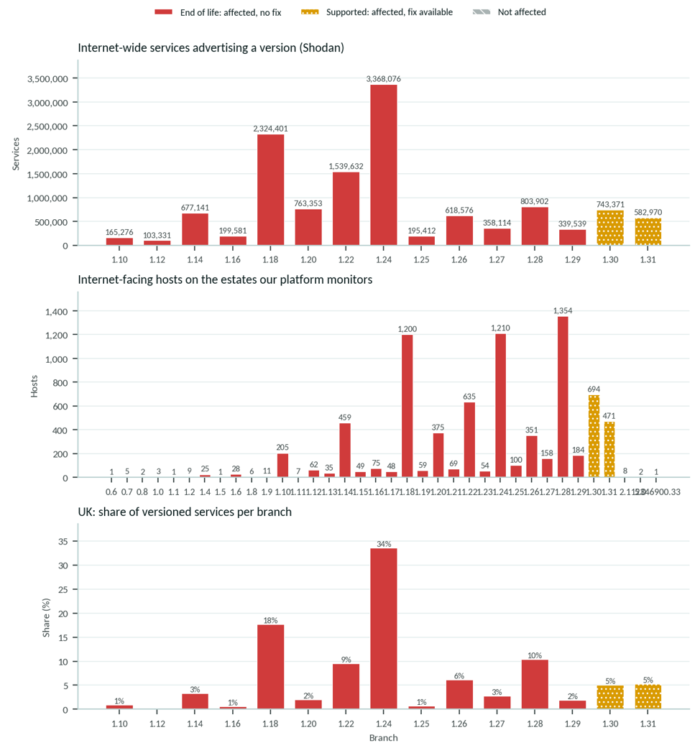
Figure 2: NGINX branches advertised by internet-facing systems
Counts are services (IP and port) or hosts, not organisations. Distribution builds can carry vendor fixes under an older version string, so supported-branch counts are an upper bound. Our platform never probes these systems: it reads passively collected scan data. Internet-wide counts: Shodan, 2026-11-19.
What to do now
Patch first
- Upgrade every NGINX Open Source instance to 1.30.7 or 1.31.9 and every NGINX Plus instance to 37.0.8.1 or 37.3.0.1 (or your distribution’s fixed package), starting with internet-facing systems. NGINX Plus 37.2.0.1 fixes only CVE-2026-123633.
- Restart long-running services after patching so the fixed code is actually loaded.
Reduce exposure while you patch
- Where HTTP/2 is not needed, turn it off. This blocks CVE-2026-123007 and CVE-2026-123633; clients fall back to HTTP/1.1, but gRPC and other HTTP/2-only traffic will stop working.
- Turning off HTTP/2 does not block CVE-2026-121810. Where HTTP/3 is not needed, remove the QUIC listeners, turn HTTP/3 off, stop advertising h3 in the Alt-Svc header and check that nothing still listens on UDP 443.
- Restrict access to systems you cannot patch at once: VPN, allow-lists or authentication in front of them.
- Turn on web application firewall rules where your provider has published them for these CVEs; treat this as a stopgap, not a fix.
- Where neither is possible, consider taking the system offline or isolating it.
Hunt for signs of compromise
- Review logs on exposed systems for unusual requests, errors and crashes since 2026-11-18.
- Check for new or modified files in application and upload directories, and for unexpected child processes of the NGINX service or the server that hosts it.
- Watch for outbound connections from these systems to unfamiliar hosts, and for new scheduled tasks or accounts.
Look beyond your own servers
- Inventory NGINX you do not host yourself: hosted websites, SaaS, appliances and control panels.
- Ask key suppliers and hosting providers whether they are affected and when they will patch, and record the answers.
Sources
| Published (UTC) | Source | Title |
| 2026-11-18 00:00 | CERT-FR | Multiples vulnérabilités dans F5 NGINX (18 novembre 2026) https://www.cert.cyber.gouv.fr/alerte/CERTFR-2026-ALE-017/ |
| 2026-11-18 00:00 | CERT-FR | Multiples vulnérabilités dans les produits F5 (18 novembre 2026) https://www.cert.cyber.gouv.fr/avis/CERTFR-2026-AVI-1567/ |
| 2026-11-18 18:30 | CERT-EU | 2026-022: Critical vulnerabilities in Nginx https://cert.europa.eu/publications/security-advisories/2026-022/ |
| 2026-11-18 18:54 | CyberScoop | It’s NGINX’s turn to cause vulnpocalypse headaches https://cyberscoop.com/nginx-critical-vulnerabilities-exploits/ |
| 2026-11-19 09:21 | Security Affairs | nginx2root:AI Discovers Five Critical nginx Flaws and a Path to Root https://securityaffairs.com/203440/hacking/nginx2rootai-discovers-five-critical-nginx-flaws-and-a-path-to-root.html |
| 2026-11-18 | CVE record | CVE-2026-113425 reference https://my.f5.com/manage/s/article/K000163931 |
| 2026-11-18 | CVE record | CVE-2026-121810 reference https://my.f5.com/manage/s/article/K000163927 |
| 2026-11-18 | CVE record | CVE-2026-123007 reference https://my.f5.com/manage/s/article/K000163926 |
| 2026-11-18 | CVE record | CVE-2026-123007 reference https://www.wiz.io/blog/nginx-http2-rce-vulnerabilities |
| 2026-11-18 | CVE record | CVE-2026-123007 reference https://news.ycombinator.com/item?id=50547374 |
| 2026-11-18 | CVE record | CVE-2026-123633 reference https://my.f5.com/manage/s/article/K000163928 |
| 2026-11-18 | CVE record | CVE-2026-123633 reference https://www.wiz.io/blog/nginx-http2-rce-vulnerabilities |
| 2026-11-18 | CVE record | CVE-2026-123633 reference https://news.ycombinator.com/item?id=50547374 |
| 2026-11-18 | CVE record | CVE-2026-123634 reference https://my.f5.com/manage/s/article/K000163925 |
| 2026-11-19 | Shodan | Host counts per product branch, per required feature (advertise HTTP/2 over TLS (ALPN h2), advertise HTTP/3 (Alt-Svc h3)) and per country |
Platform statistics are aggregate counts from our platform’s passive observations of internet-facing systems and do not identify any organisation. Judgements use the Professional Head of Intelligence Assessment (PHIA) probability yardstick. This advisory reflects information available on 19 November 2026.
Concerned about your exposure?
Speak to our cyber experts for advice and support